
Voices of Prois...The Women Who Held The Blind Door Open
By: Prois Staffer, Gretchen Steele
At the Kaskaskia River Delta Waterfowl Banquet, one award becomes a tribute to the women, mentors, and Southern Illinois conservation community who make belonging possible.
I’ll be honest with you — I'm a lot more comfortable in a flooded timber at 4 a.m. than I am standing in front of a room full of people being recognized for anything. Give me decoys, give me dogs, give me the cold bite of a November morning in the Kaskaskia bottoms, and I am right at home. But last week, at the Kaskaskia River Delta Waterfowl Banquet, something happened that made me set down my discomfort long enough to really feel the weight of gratitude. And what I felt most wasn't pride in myself — it was profound, bone-deep appreciation for the women and the community that shaped every single thing I've been able to do in the outdoors.
We don't talk enough about the women who came before. Not in the way they deserve. The women who were out there hunting and conserving wild places long before it became something anyone celebrated, long before the camo was cut to fit a female form, long before there were spaces carved out specifically for them. I’ve spent over 50 years as an outdoorswoman and river rat. The women who opened the blind door for me really were true pioneers. Those women existed. They persisted. And because of their persistence, women like me got to walk into spaces that were slightly — barely— more prepared to receive us.
Female hunters are conservation multipliers. That's the only way I know how to say it. When a woman becomes a hunter, she rarely does it quietly or alone. She brings people with her. She mentors with a ferocity that I think is uniquely feminine — fiercely generous, deeply personal, and stubbornly committed to making sure the door stays open behind her.

I have watched women in this state and across this country raise hundreds of thousands of conservation dollars, restore wetland habitat, run youth hunting programs on shoestring budgets with maximum heart, and do it all while being told, sometimes directly and sometimes through a thousand tiny signals, that maybe this wasn't quite their space. They stayed anyway. And the wetlands, the birds, the wild places — they are better for it.
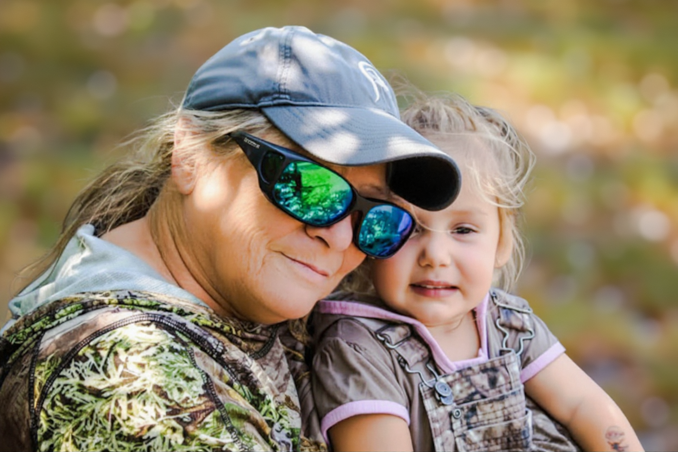
When I think about my own journey, I cannot separate it from the women who mentored me. The ones who shared their hard-won knowledge without ego, who corrected my calling without condescension, who made me feel like my presence in a duck blind was not just tolerated but genuinely valued.

Those women gave me something that no award can replicate — they gave me a sense of belonging. And belonging is what turns a curious newcomer into a lifelong conservationist. If you have been that woman for someone — if you have opened a blind door and said, 'Get your ass in here! You CAN do this!”' — please know that the ripple effect of that gesture goes further than you will ever fully see. You are the story. You have always been the story.
Southern Illinois doesn't always get the attention it deserves in conservation conversations that tend to center on flashier landscapes. But those of us who know the Lower Kaskaskia River know what we have here. We know the sounds of it and the smells of it and the specific quality of light on a flooded field when the mallards are working hard and low and everything in you goes perfectly, beautifully still.
The work being done to protect and restore this centuries-old river bottom is the work of a true community. It is landowners who make hard decisions about their land because they understand legacy. It is wildlife managers and biologists running on too little sleep and too little funding because the mission matters more than the comfort.
It is hunters, River Rats, lifelong residents who love the bottoms and river — women and men alike — investing not just their dollars but their labor, their advocacy, and their social capital into keeping this place alive and productive for the birds and for the generations that will come after us.
The Kaskaskia River Delta Waterfowl Banquet is the heartbeat of that community effort. It is where people who love this place come together to feed the work. Every plaque, every paddle raised, every conversation over a plate of food is part of a much larger conservation story — one written in restored wetland acres, in thriving wood duck populations, in the faces of young hunters experiencing a sunrise over open water for the very first time. That community is extraordinary. And it is made more extraordinary by the women who have claimed their seats at its table and refused to leave.
Awards are funny things. They land in a single moment, but they're built over a lifetime of small, consistent choices made by many hands. This one belongs to the mentors. It belongs to the women who held open doors and refused to let the culture of exclusion win. It belongs to the conservation community of the Lower Kaskaskia River who love this landscape with everything they have. I am deeply honored, genuinely humbled, and more motivated than ever to pay it forward — to be the woman in the blind who scoots over, makes room, and says without hesitation, 'Yes. You absolutely belong here.'

